 Free Consultation

When a property dispute, illegal construction, land grabbing issue, or civil conflict arises, many people in Pakistan immediately ask one question: “How can I stop the other party legally before permanent damage happens?”
This is where a stay order becomes important.
A stay order is one of the most commonly used legal remedies in Pakistani civil courts. It helps prevent illegal actions until the court decides the matter finally. Whether the dispute involves property, inheritance, possession, demolition, business agreements, or construction, a stay order can provide temporary legal protection.
In this guide, we explain the stay order procedure in Pakistan, the required documents, court process, legal grounds, and practical advice from a litigation perspective.
What Is a Stay Order in Pakistan?
A stay order is a temporary order issued by a court to stop a person, authority, or party from taking a particular action until the case is decided.
In Pakistan, stay orders are generally granted under:
- Order XXXIX Rules 1 & 2 of the Code of Civil Procedure, 1908 (CPC)
- Section 151 CPC (inherent powers of court)
Official law reference:
Code of Civil Procedure, 1908
The purpose of a stay order is to maintain the existing situation and prevent irreparable harm.
Common Situations Where Stay Orders Are Filed
Stay orders are frequently sought in:
- Property ownership disputes
- Illegal possession cases
- Family inheritance disputes
- Construction disputes
- Eviction matters
- Demolition notices
- Land grabbing issues
- Illegal transfer of property
- Business and contract disputes
- Government authority actions
For example, if someone attempts to illegally sell jointly owned property, the affected party may seek a stay order to stop the sale immediately.
Types of Stay Orders in Pakistan
- Temporary Stay Order
A short-term order granted until the next hearing date.
- Interim Injunction
A temporary injunction issued during the pendency of the suit.
- Permanent Injunction
Granted after the final decision of the case.
Legal Requirements for Getting a Stay Order
Pakistani courts usually consider three essential principles before granting a stay order.The applicant must show that there is a genuine legal dispute requiring court intervention.
Balance of Convenience
The court checks which party may suffer greater hardship if the stay is granted or refused.
Irreparable Loss
The applicant must prove that damages cannot be compensated adequately through money alone.
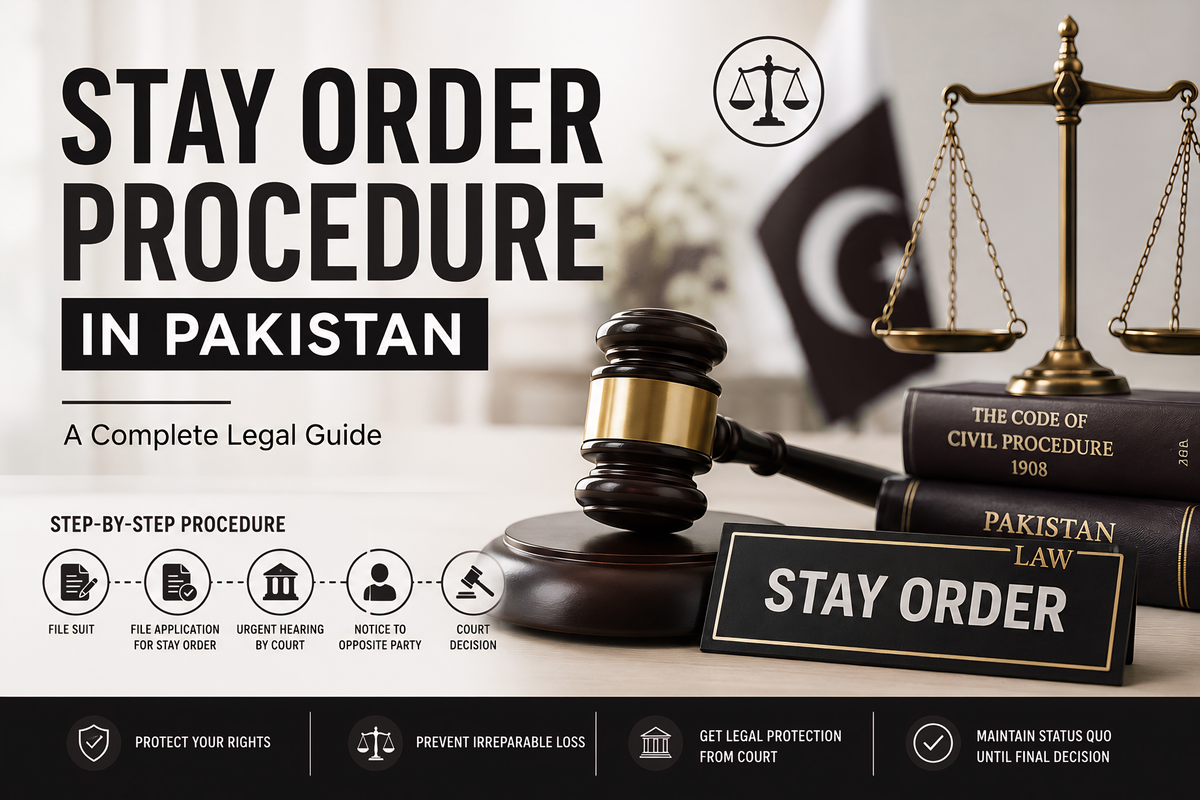
Stay Order Procedure in Pakistan – Step-by-Step
Step 1 – Consult a Civil Lawyer
A lawyer reviews:
- Property documents
- Ownership record
- Sale deeds
- Registry documents
- Mutation records
- Notices and correspondence
Professional legal drafting is important because weak pleadings often lead to rejection.
For civil litigation and property dispute assistance, visit:
Dennings Law Firm
Step 2 – Drafting of Civil Suit
The lawyer prepares:
- Main civil suit
- Application for temporary injunction/stay order
- Supporting affidavit
- Relevant documents
The application clearly explains:
- Nature of dispute
- Immediate threat
- Harm likely to occur
- Legal grounds for injunction
Step 3 – Filing Before Competent Court
The suit is filed in the appropriate court depending on:
- Property value
- Nature of dispute
- Territorial jurisdiction
Usually filed before:
- Civil Judge
- Senior Civil Judge
- District Judge
Step 4 – Urgent Hearing
If urgency exists, the court may hear the matter immediately.
In urgent situations, courts can issue:
- Ex parte stay order
- Temporary restraining order without hearing the opposite side initially
This happens where delay may cause serious loss.
Step 5 – Notice to Opposite Party
After temporary relief, the court issues notice to the respondent.
The opposite party then files:
- Written reply
- Objections
- Counter documents
Step 6 – Arguments by Both Parties
Both lawyers present:
- Legal arguments
- Documentary evidence
- Relevant precedents
The court evaluates whether interim relief should continue.
Step 7 – Court Decision
The court may:
- Confirm the stay order
- Modify it
- Dismiss the application
If confirmed, the stay generally continues until final disposal of the suit.
Documents Required for Stay Order in Property Cases
Commonly required documents include:
- CNIC copies
- Property registry
- Sale deed
- Mutation/Fard
- Utility bills
- Possession proof
- Photographs
- Relevant notices
- Inheritance documents
- Revenue record
How Long Does a Stay Order Last?
A stay order remains effective:
- Until next hearing,
- Until disposal of injunction application,
- Or until final decision of the suit.
Duration depends on:
- Court workload
- Complexity of dispute
- Conduct of parties
Can a Stay Order Be Challenged?
Yes.
The opposite party may:
- File appeal
- Seek vacation of stay
- Challenge before higher court
Courts can also cancel stay orders obtained through:
- Misrepresentation
- Concealment of facts
- Fake documents
Important Practical Advice
Do Not Delay
Courts often refuse injunctions where the applicant remained silent for a long time.
Maintain Proper Documentation
Weak property records reduce chances of relief.
Avoid Illegal Possession Attempts
Taking law into your own hands may damage your case.
Always Verify Property Documents
Before litigation, verify ownership through official land records.
For land record verification in Punjab:
Punjab Land Record Authority (PLRA)
For Sindh property information:
Sindh Board of Revenue
Difference Between Stay Order and Injunction
Many people use these terms interchangeably, but legally:
- A stay order generally suspends proceedings or actions.
- An injunction restrains someone from doing a specific act.
In practical Pakistani litigation, both terms are commonly used together.
Why Professional Legal Representation Matters
Civil litigation in Pakistan involves:
- Technical procedures
- Court drafting
- Documentary scrutiny
- Jurisdictional issues
A poorly drafted injunction application can result in:
- Immediate dismissal
- Delays
- Loss of interim protection
Experienced legal representation improves the chances of obtaining timely relief.
Learn more about civil litigation services at:
Dennings Law Firm – Civil & Property Litigation
Frequently Asked Questions (FAQs)
How much time does it take to get a stay order in Pakistan?
Urgent stay orders may be granted within one day in emergency situations. Regular matters may take several hearings.
Can a stay order stop property sale?
Yes. Courts may restrain parties from selling, transferring, or creating third-party interest in disputed property.
Is a lawyer necessary for a stay order?
Although legally possible without one, professional legal assistance is strongly recommended because injunction matters involve technical legal drafting.
Can police enforce a stay order?
If the court directs implementation, local administration or police may assist in enforcement.
Can a stay order be removed?
Yes. The opposing party can file an application for vacation or modification of the order.
Final Thoughts
A stay order is an important legal remedy that helps protect rights before irreversible harm occurs. In Pakistan, courts grant injunctions carefully and only where strong legal grounds exist.
Whether the matter involves property disputes, illegal occupation, inheritance conflicts, or civil disagreements, timely legal action and proper documentation play a crucial role in securing interim relief.
If you are facing a civil or property dispute, obtaining early legal guidance can help protect your rights and avoid lengthy complications later.
For legal consultation regarding civil litigation, property disputes, inheritance matters, and injunction cases, visit:
Dennings Law Firm Official Website