 Free Consultation

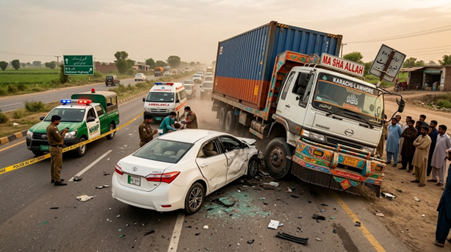
Know Your Rights. File Your Claim. Get the Compensation You Deserve.
If you or a family member has been seriously injured in a heavy vehicle accident in Pakistan — hit by a truck, bus, tanker, or overloaded goods carrier — this guide is written for you. Heavy vehicle accident injury claims in Pakistan are among the most under-pursued legal cases in the country, not because the law doesn’t offer protection, but because most victims simply don’t know their rights exist.
Pakistan’s roads see some of the highest accident fatality rates in Asia. According to the National Highway Authority (NHA), overloaded trucks and over-speeding buses are responsible for a disproportionate share of serious and fatal road accidents. The victims are usually pedestrians, motorcyclists, and passengers in smaller vehicles — ordinary people who are left with fractured bones, spinal injuries, traumatic brain damage, or worse, while the commercial vehicle operators often walk away without consequence.
That changes when you know the law. This article breaks down everything you need to know: the legal framework that protects you, the steps to take after an accident, how to file a compensation claim, and how Dennings Law Firm can stand between you and a system that can feel overwhelming.
At a Glance: Key Legal Facts for Accident Victims in Pakistan
| Key Point
|
What You Need to Know
|
| Applicable Law
|
Motor Vehicles Ordinance 1965, Fatal Accidents Act 1855, Workmen’s Compensation Act 1923
|
| Who is Liable?
|
Driver, vehicle owner, transport company, or government road authority
|
| Limitation Period
|
3 years from the date of injury to file a civil claim
|
| Compensation Types
|
Medical costs, lost income, disability allowance, pain & suffering, wrongful death damages
|
| Where to File
|
Civil Court / District Court in the jurisdiction where the accident occurred
|
| First Step
|
Seek emergency medical care immediately — then register an FIR at the nearest police station
|
Section 1: Why Heavy Vehicle Accidents Are Different — and More Dangerous
The Scale of the Problem on Pakistan’s Roads
Pakistan has over 4.5 million registered trucks, buses, and heavy transport vehicles (HTVs) operating on national and provincial highways. A significant portion of these vehicles are overloaded, poorly maintained, and driven by operators who push through long-haul routes without adequate rest. When a vehicle weighing 20 to 40 tonnes collides with a motorcycle, a rickshaw, or a small car, the outcome is rarely minor.
Common causes of heavy vehicle accidents in Pakistan include:
- Overloading — trucks carrying 2 to 3 times their legal weight limit
- Brake failure due to poor vehicle maintenance
- Fatigued or unqualified drivers
- Night driving without functioning headlights or reflectors
- Overspeeding on highways, especially the M-2, N-5, and N-55
- Reversing without proper visibility, particularly at loading docks
- Dangerous overtaking on two-lane mountain roads
Why Victims Often Don’t Pursue Claims
Many accident victims in Pakistan — particularly those from lower-income backgrounds — never file a legal claim. The reasons are common and understandable:
- They don’t know they have legal rights
- They fear the time and cost of going to court
- They settle for a small, inadequate informal payment under pressure
- They face intimidation from the transport company or vehicle owner
- They believe the legal process is too slow to be worth it
Every one of these concerns is valid. But every one of them can be addressed with the right legal guidance. The law in Pakistan is clear: if someone’s negligence caused your injury, you are entitled to compensation — and the court system exists to enforce that right.
| Important Legal Fact:
Under Pakistani law, you do not have to prove criminal intent to win a civil compensation claim. You only need to prove that the driver or vehicle owner was negligent — meaning they failed to exercise reasonable care — and that this negligence caused your injury. This is a far lower legal bar than a criminal conviction.
|
Section 2: The Legal Framework — Your Rights Under Pakistani Law
The Motor Vehicles Ordinance, 1965
This is the primary legislation governing road traffic in Pakistan. It establishes the legal obligations of drivers and vehicle owners, including requirements for third-party insurance, vehicle fitness certificates, and valid driving licences. When a heavy vehicle operator violates these requirements — which is extremely common — it strengthens your civil claim significantly.
Under this ordinance, vehicle owners are jointly liable with drivers for accidents caused during the vehicle’s operation. This is critical because individual truck drivers often have no personal financial resources — but the company or fleet owner behind them does.
The Fatal Accidents Act, 1855
If the accident resulted in a death, this is the law that governs wrongful death claims. Under the Fatal Accidents Act, the legal heirs of a deceased victim — spouse, children, parents — have the right to file a civil suit for compensation against the responsible party. Damages can include loss of financial support, funeral expenses, and the profound emotional impact on surviving family members.
The Workmen’s Compensation Act, 1923
If the accident occurred while the victim was performing work-related duties — for example, a labourer or factory worker hit by a truck at a construction site — the Workmen’s Compensation Act may apply in parallel. This provides a separate channel for compensation that doesn’t require proving fault, only that the injury occurred in the course of employment.
Pakistan Penal Code (PPC) — Criminal Negligence
In addition to a civil compensation claim, a criminal complaint can be filed under Section 279 (rash driving) and Section 304-A (causing death by negligence) of the PPC. A criminal conviction doesn’t directly pay you compensation, but it establishes fault on the record and significantly strengthens your parallel civil claim. In serious cases, pursuing both simultaneously is the most effective strategy.
Section 3: What to Do Immediately After a Heavy Vehicle Accident
Step 1 — Get to Safety and Call for Medical Help
If you are physically able, move yourself or others away from the danger zone. Heavy vehicles can still be moving, leaking fuel, or unstable. Call 1122 (Rescue Service) or 115 (Edhi Foundation ambulance) immediately. Do not wait to see if the pain subsides — internal injuries, spinal damage, and traumatic brain injuries often don’t present immediate symptoms.
Step 2 — Register an FIR at the Police Station
Filing a First Information Report (FIR) is one of the most important steps you can take. It creates an official government record of the accident, identifies the vehicle and driver, and triggers a police investigation. Without an FIR, the driver and owner can later deny the accident entirely.
When filing the FIR, make sure to:
- Provide the registration number of the heavy vehicle
- Name the driver if known, and describe any witnesses
- Note the exact location, time, and direction of travel
- Request a copy of the FIR for your own records — you are legally entitled to it
Step 3 — Document the Accident Scene
If anyone at the scene has a mobile phone, take photographs and video of:
- The position of the heavy vehicle and your vehicle or motorcycle
- Tyre marks, skid marks, and road debris
- Any road defects, missing signage, or broken barriers that contributed
- Your visible injuries
- The vehicle registration number, licence plate, and any company markings on the truck or bus
This visual evidence can be decisive in court and is often lost within hours as vehicles are moved and the scene is cleared.
Step 4 — Collect Witness Information
Bystanders are often willing to speak at the scene but difficult to locate later. Get names, phone numbers, and CNIC numbers if possible. A witness who saw the driver running a signal or driving recklessly can change the outcome of your case entirely.
Step 5 — Seek Consistent Medical Treatment and Keep Every Record
Your medical records are your financial record in a compensation claim. Keep all of the following:
- Hospital admission and discharge documents
- All diagnostic reports — X-rays, CT scans, MRIs
- Prescriptions and pharmacy receipts
- Bills for physiotherapy, rehabilitation, or specialist consultations
- A personal diary noting your pain levels, limitations, and how your life has been affected
The more thoroughly you document your medical journey, the stronger your claim becomes.
| Warning:
Do not accept any informal cash payment from the truck driver, the vehicle owner, or a middleman at the scene. Accepting this payment may be treated as a full settlement and bar you from pursuing a proper legal claim later. Always consult a lawyer before agreeing to any financial arrangement.
|
Section 4: How to File a Heavy Vehicle Accident Injury Claim in Pakistan
Civil Claim vs. Criminal Complaint — What Is the Difference?
Many accident victims file a criminal complaint (FIR) but don’t realise that a separate civil lawsuit is necessary to actually recover financial compensation. A criminal conviction may result in the driver being imprisoned, but it does not automatically put money in your hands. For that, you need a civil suit for damages filed in the District Court.
Both processes can run simultaneously, and your attorney can manage both on your behalf.
Who Do You File the Civil Claim Against?
In a heavy vehicle accident, there may be multiple responsible parties:
- The driver — for negligent operation of the vehicle
- The vehicle owner — who is jointly liable under the Motor Vehicles Ordinance
- The transport company — if the driver was working as an employee at the time
- The government / road authority — if a road defect, lack of signage, or infrastructure failure contributed to the accident
Identifying all liable parties is one of the most important things your attorney will do. Suing only the driver when there is a wealthy fleet owner or company behind them means leaving significant compensation on the table.
What Evidence Does Your Lawyer Need?
- Copy of the FIR
- Medical records, hospital bills, and prescriptions
- Photographs and video from the scene
- Vehicle registration documents and fitness certificate (obtained through police)
- Driver’s licence details (your attorney can obtain these through court process)
- Witness statements
- Proof of income if claiming for lost wages
- Receipts for any out-of-pocket expenses
How Long Does a Case Take in Pakistan?
Civil litigation in Pakistan can be slow. A straightforward case may resolve in 1 to 3 years; complex cases involving multiple parties or serious injuries can take longer. However, courts do grant interim relief in some circumstances, and the threat of a well-documented civil suit often motivates transport companies to settle out of court more quickly.
At
At Dennings Law Firm, our goal is to push your case towards the fastest fair resolution possible — whether that is a negotiated settlement or a court judgment in your favour.
Section 5: What Compensation Can You Claim?
Economic Damages — Your Calculable Financial Losses
These are the concrete, documented financial losses caused by your accident:
- Emergency hospital and surgical costs
- Ongoing medical treatment, physiotherapy, and medication
- Future medical care projected by your doctor (for permanent or long-term injuries)
- Lost wages from time off work during recovery
- Loss of future earning capacity if the injury permanently limits your ability to work
- Cost of assistive devices — wheelchairs, prosthetics, hearing aids
- Transportation costs to and from medical appointments
- Property damage — repair or replacement of your motorcycle, vehicle, or belongings
Non-Economic Damages — The Losses Without a Price Tag
Pakistani courts recognise damages beyond financial loss. These include:
- Pain and suffering — the physical pain endured as a result of the injuries
- Emotional distress — anxiety, depression, and psychological trauma following the crash
- Permanent disability or disfigurement
- Loss of enjoyment of life — activities and work you can no longer do
- Loss of consortium — the impact on your marriage and family life
Wrongful Death Damages
If a family member was killed in the accident, compensation can include:
- Financial support the deceased would have provided over their lifetime
- Funeral and burial expenses
- Compensation for the grief and loss experienced by surviving family members
Under Pakistani case law, courts have increasingly recognised the right of surviving families to significant financial awards, particularly when the breadwinner of a household was killed by a commercial vehicle operator.
Section 6: Common Injuries in Heavy Vehicle Accidents
Why Injuries from Heavy Vehicle Collisions Are Severe
When a vehicle weighing tens of tonnes strikes a person on a motorcycle or on foot, the physics are catastrophic. The injuries sustained in heavy vehicle accidents are consistently among the most serious treated in Pakistani hospitals:
- Traumatic Brain Injury (TBI) — caused by the head striking the ground or another surface; ranges from concussion to permanent cognitive impairment
- Spinal Cord Injury — partial or complete paralysis resulting from vertebral fractures or disc compression
- Multiple fractures — including pelvis, femur, and ribcage fractures that require surgery and lengthy rehabilitation
- Internal organ damage — blunt trauma to the abdomen can rupture the spleen, liver, or kidneys
- Crush injuries — limbs caught under vehicle wheels may require amputation
- Severe road rash and burns — requiring skin grafting and long-term wound management
- Psychological trauma — PTSD, anxiety disorders, and depression are common but often unaddressed
The Hidden Cost of Delayed Treatment
Many victims in Pakistan delay or abandon medical treatment due to cost. This is entirely understandable — but it has two serious consequences. First, injuries that could heal with proper treatment become permanent disabilities. Second, gaps in medical records weaken your compensation claim. An attorney can advise on how to document your situation even when access to treatment is limited.
Frequently Asked Questions About Heavy Vehicle Injury Claims in Pakistan
Can I file a claim if the driver fled the scene and I don’t know who owns the truck?
Yes. Even if the driver fled, the vehicle registration number — which should be on the FIR or captured in photographs — can be traced through the Excise and Taxation Department to identify the registered owner. Your attorney can compel disclosure through court process. If the vehicle cannot be traced at all, compensation may be sought through your own insurer or through a public interest mechanism in some provinces.
What if the truck driver was found not guilty in criminal court?
A criminal acquittal does not prevent you from winning a civil case. The standard of proof in criminal law is ‘beyond reasonable doubt,’ which is much higher than the civil standard of ‘balance of probabilities.’ Many accident victims win civil compensation even after criminal cases fail. The two proceedings are entirely separate.
How long do I have to file a compensation claim in Pakistan?
The general limitation period for civil suits in Pakistan is three years from the date the cause of action arose — meaning the date of the accident. However, this can vary depending on the nature of the claim and the parties involved. Do not wait. Evidence disappears, witnesses forget, and delays can be used against you. Contact a lawyer as soon as possible.
I am a daily wage labourer and cannot afford a lawyer. What can I do?
Dennings Law Firm offers free initial consultations and handles many personal injury cases on a fee arrangement that does not require upfront payment. Additionally, Pakistan’s Legal Aid offices and Human Rights departments provide assistance to those who cannot afford private representation. Do not let financial hardship stop you from asserting your rights.
The transport company is pressuring my family to sign a settlement document. What should we do?
Do not sign anything without independent legal advice. Transport companies and their insurers are experienced at settling claims quickly and cheaply. Once you sign a release, your legal rights are extinguished. Contact us immediately — even a brief consultation can prevent you from making a decision you cannot undo.
What if the accident was partly my fault — can I still claim?
Pakistani civil law follows the principle of contributory negligence. If you were partly at fault, your compensation may be reduced proportionally — but it is not eliminated. For example, if the court finds you 25% at fault and your total damages are Rs. 2,000,000, you would still recover Rs. 1,500,000. The exact application depends on the facts of your case.
Is there a difference between suing in a city court versus a highway accident in a rural area?
Yes. Jurisdiction is determined by the location of the accident, not where you live. A rural accident on the N-5 or a national highway will be filed in the District Court of the relevant district. This can create practical challenges, but your attorney manages this on your behalf — you are not required to handle court filings yourself.
What if the heavy vehicle was a government-owned bus or NHA vehicle?
Claims against government entities follow a different process, typically involving prior notice to the relevant department before a suit can be filed. The timeline and procedures differ from private suits. This is one reason having an experienced attorney from day one is especially important in cases involving government vehicles or road authorities.
| Injured in a Heavy Vehicle Accident in Pakistan?
You deserve proper legal representation — not a rushed roadside settlement. At Dennings Law Firm, your first consultation is completely free. We will listen to your case, explain your rights in plain language, and tell you honestly what your options are. Book Your Free Consultation: www.denningslawfirm.com/contact
|
Dennings Law Firm — Standing Up for Injury Victims Across Pakistan.