 Free Consultation

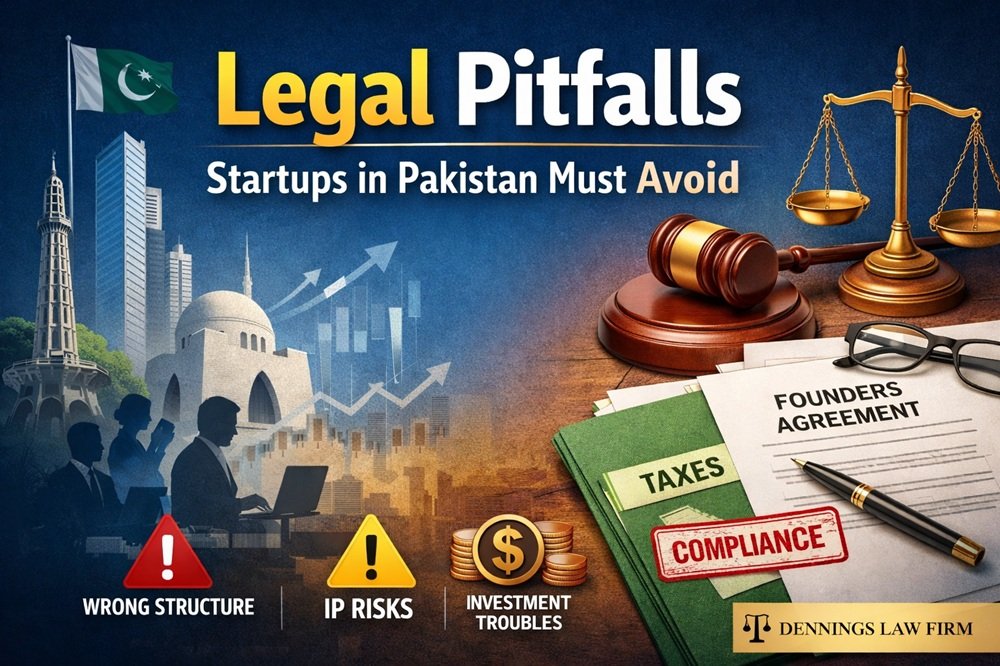
In Pakistan, starting a business is now simpler than it was ten years ago. Online banking, digital integration, and remote teams have made it easier for companies in Karachi, Islamabad, Quetta, and rest of Pakistan to take initiative to launch
However, many founders continue to misunderstand how early legal blunders quietly harm firms, frequently when the business begins to develop or attract financing.
This article explains the core legal issues every startup in Pakistan must address, based on real corporate practice, not theory.
1. Choosing the Wrong Business Structure
One of the first decisions founders make is also one of the most important: sole proprietorship, partnership, or private limited company.
Many startups begin as sole proprietorships to “save costs,” only to discover later that:
- personal assets are exposed to liability,
- banks and investors refuse to engage,
- conversion becomes expensive and disruptive.
For most startups with growth ambitions, private limited company registration with SECP offers better protection, credibility, and scalability.
👉 This is often where professional guidance from a corporate law firm becomes critical.
For legal guidance on legal issues just reach us at:
2. Ignoring Founders’ Agreements (A Costly Mistake)
Founders usually start with trust and good intentions. Unfortunately, verbal understandings do not survive pressure.
Common disputes arise over:
- equity split,
- decision-making authority,
- exit of a founder,
- intellectual property ownership.
A proper founders’ agreement clarifies expectations early and prevents disputes that can otherwise destroy the business.
From a legal standpoint, this document is not optional for serious startups—it is a risk-management tool.
3. Non-Compliance with SECP and Tax Authorities
Many startups incorporate successfully but then fail to maintain compliance.
Common compliance gaps include:
- failure to file annual returns with SECP,
- missing board resolutions,
- non-registration with FBR,
- incorrect tax filings.
Non-compliance leads to penalties, director disqualification risks, and serious problems during due diligence.
Startups planning to raise funds or enter partnerships must treat corporate compliance as ongoing, not one-time paperwork.
👉 Regular advisory support helps founders stay compliant while focusing on growth.
4. Intellectual Property Is Often Left Unprotected
For startups, intellectual property is often the core asset—whether it’s a brand name, software, design, or content.
Yet many founders delay:
- trademark registration,
- ownership documentation,
- IP assignment from developers or designers.
This creates major risks, including brand theft and loss of ownership claims.
In Pakistan, trademark protection is affordable and enforceable when done correctly and early.
5. Employment Contracts Are Treated Casually
Hiring employees or consultants without proper agreements exposes startups to:
- wrongful termination claims,
- IP ownership disputes,
- confidentiality breaches.
Even small teams should have:
- written employment or consultancy contracts,
- confidentiality clauses,
- clear termination terms.
A well-drafted contract protects both the business and its people, creating clarity and professionalism from day one.
6. Investment Without Legal Structuring
Startups receiving funds from friends, family, or angel investors often skip documentation to “move fast.”
This leads to future conflicts about:
- whether funds were loans or equity,
- valuation disputes,
- voting and control rights.
Proper share subscription agreements and shareholder agreements protect both founders and investors and make future fundraising easier.
7. Why Startups Need Ongoing Legal Support
Startups gain momentum quickly. What works at the idea stage may become a liability during growth.
Ongoing legal advisory helps startups:
- manage risk proactively,
- stay compliant,
- prepare for investment,
- avoid litigation.
Rather than reacting to problems, successful startups integrate legal strategy into business planning.
👉 Firms with corporate, tax, and commercial expertise can provide this continuity.
Dennings law firm can help to start-ups in any legal matter for more detail:
visit us at: https://denningslawfirm.com/legal/start-up-investment
Frequently Asked Questions (FAQs)
Is it necessary for every startup to register as a private limited company?
Not always, but startups planning to grow, raise investment, or limit liability should strongly consider it.
Can a startup operate without a lawyer in Pakistan?
Yes, but it significantly increases legal and financial risk, especially during growth or disputes.
When should a startup hire a corporate lawyer?
Ideally at incorporation or before onboarding partners, employees, or investors.
Are legal services expensive for startups?
Preventive legal work is usually far more affordable than resolving disputes or regulatory penalties later.
Final Thoughts
Startups succeed on innovation, speed, and execution—but legal foundations determine whether success lasts.
Addressing corporate structure, compliance, contracts, and IP early allows founders to focus on growth with confidence.
For startups operating in Karachi, Islamabad, Quetta, or across Pakistan, informed legal planning is not a luxury—it is a competitive advantage.